

Position:
Home
 News
company news
Introduction to Hexagonal Heavy Nut
Introduction to Hexagonal Heavy Nut
Release time:2017-12-25 Reading volume: 496
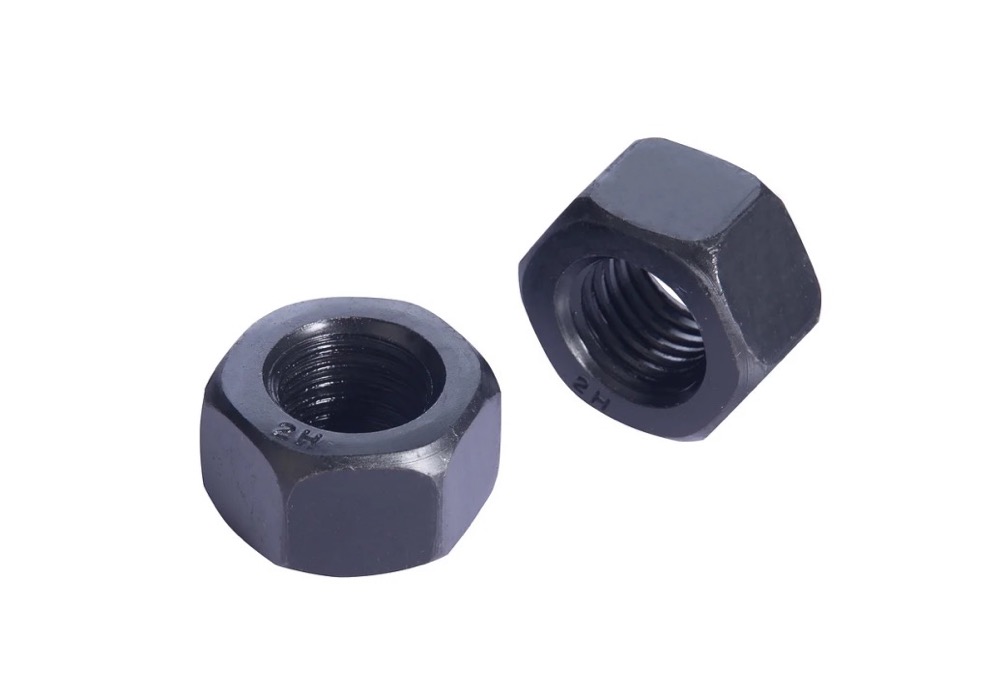
Hexagonal heavy-duty nuts, also known as high-strength hexagonal nuts, are widely used fasteners in industries such as machinery, construction, and power. The following is a detailed introduction to hexagonal heavy-duty nuts:
1、 Standards and specifications
Standards: There are various standards for hexagonal heavy-duty nuts, among which common ones include domestic GB6170 and GB6175, as well as international standards ISO4032 and ASME/ANSI B18.2.2. These standards specify the dimensions, tolerances, materials, and other technical requirements of nuts.
Specifications: The specifications of hexagonal heavy nuts are usually expressed in terms of size and pitch. For example, the outer diameter of the M3 nut is 5.5mm and the pitch is 0.5mm; The outer diameter of the M4 nut is 7mm, the pitch is 0.7mm, and so on. These specifications enable hexagonal heavy-duty nuts to meet the tightening requirements of different equipment and structures.
2、 Characteristics
High strength: Hexagonal heavy-duty nuts have higher strength than ordinary nuts and can withstand greater tension and pressure. This makes it perform well in situations where it needs to withstand heavy loads or vibrations.
Large size: The appearance and size of hexagonal heavy-duty nuts are relatively large, and installation and disassembly require the use of tools such as a large wrench or wrench socket. Although it is inconvenient to operate, its tightening force is stronger than ordinary nuts.
High precision: The manufacturing accuracy of hexagonal heavy nuts is high, and important dimensions and pitches require more precision. This helps to ensure the reliability and safety of bolts, preventing equipment failures or accidents caused by loosening or detachment.
3、 Purpose
Construction engineering: In the construction industry, hexagonal heavy-duty nuts are commonly used for connecting steel structures, steel frames, and bridges. It ensures stability and safety between structural components, withstanding adverse factors such as heavy loads and vibrations.
Mechanical manufacturing: In the field of mechanical manufacturing, hexagonal heavy-duty nuts are used to fix various components of mechanical equipment, such as automobiles, ships, aviation, and machine tools. It ensures the normal operation and long-term stability of the equipment, reducing failures and downtime caused by looseness or detachment.
Electronic products: In some electronic products, such as servers and communication devices, special types of hexagonal bolts (i.e. snap screws) are also used. These bolts have specific tightening force and stability requirements to ensure the reliable operation of electronic components.
4、 Material
The material of hexagonal heavy-duty nuts is generally carbon steel or stainless steel. Carbon steel nuts have high strength and hardness, making them suitable for fastening general machinery and structures; Stainless steel nuts, on the other hand, have excellent corrosion resistance and are suitable for harsh environments such as humidity and corrosion.
In summary, hexagonal heavy-duty nuts are high-strength, large-sized, and high-precision fasteners widely used in fields such as construction, machinery, and electronics. Its standards and specifications are diverse and can meet the fastening needs of different equipment and structures. When selecting and using, appropriate materials and specifications should be selected based on actual needs and environmental conditions.